7 Red Flags in Tenant Applications: A Small Landlord's Screening Checklist
7 Red Flags in Tenant Applications: A Small Landlord's Screening Checklist The biggest red flags in tenant applications are income that doesn't match


7 Red Flags in Tenant Applications: A Small Landlord's Screening Checklist
The biggest red flags in tenant applications are income that doesn't match pay stubs, employers who can't be verified, gaps or mismatched dates in rental history, references who turn out to be friends, pressure to move in fast, and refusal to pay a screening fee. Catch these before you sign, and most bad-tenant problems never start.
Every applicant looks good until the first rent check bounces. We built this checklist after watching the same problems repeat: forged pay stubs, fake landlord references, and tenants who vanish in ninety days. Screening one application takes about an hour. An eviction takes months and thousands of dollars. The math is not close.
At a Glance
| Red Flag | What It Looks Like | What to Do About It |
|---|---|---|
| Income doesn't add up | Application says $5,000/month; pay stubs show $3,200 | Do the math, then call the employer on a number you find yourself |
| Rental history has holes | Tenancy dates overlap or leave unexplained gaps | Ask about every gap and verify each prior address |
| The 'landlord' is a friend | The reference answers like a roommate, not a property owner | Look up the property owner in public records |
| Rushed move-in | Offers extra cash to skip screening and move in today | Slow down. No exceptions for anyone |
| Refuses the application fee | Wants you to run checks on your dime | Charge a standard fee or move to the next applicant |
Why Is Tenant Screening the Highest-Stakes Decision You Make as a Landlord?
One bad tenant can cost more than every other mistake this year combined: missed rent, property damage, legal filing fees, and months of vacancy. TurboTenant's landlord guidance puts it plainly — run your rentals like a business, not a hobby. For us, that business starts at the application. We treat screening as our first and cheapest repair. It costs about an hour. Skipping it can cost a full season of rent.
Write your approval criteria before you list the unit
Decide in advance: income of at least 3x rent, no evictions within a set number of years, verifiable rental history, and a paid application fee. Write it down before anyone applies.
Score every applicant on the same checklist
Same questions, same documents, same standards for applicant one and applicant fifty. Consistency keeps your decisions fair and defensible.
Keep a note on every decision
Write down why you approved or denied each applicant, and keep that note with the application. Memory fades; records do not.
Which Income and Employment Red Flags Should You Check First?
Income problems are the most common warning sign and the easiest to check. Start with the math, then verify the story matches the paperwork. RentSpree's screening checklist recommends comparing three things directly: does the income on the application match the pay stubs, does the employer name match what the employer confirms, and do the dates of prior tenancy line up with what previous landlords tell you? If any answer is no, you have your first red flag.
Do the income math yourself
Monthly gross income should comfortably cover rent. A common standard is income of at least 3x the monthly rent. If rent is $1,500, look for about $4,500 per month.
Compare the application against the pay stubs
A mismatch between stated income and stub income is worse than a slightly low income. It means you are being told two different stories.
Call the employer on a number you find yourself
Never call the number printed on the stub. Search the company online, call the main line, and ask to confirm employment. If the employer name on the paperwork does not match what the company confirms, stop and dig deeper.
Learn what a fake pay stub looks like
Watch for perfectly round figures, identical deductions on every stub, the same font across different documents, a missing employer address, or a file that looks like a downloaded template. Fakes cost a few dollars online, so verify everything.
What Rental History Red Flags Predict a Problem Tenant?
Past behavior at other rentals is the best predictor of future behavior at yours. Application timelines are easy to fudge — unless you actually line the dates up.
Lay the tenancy dates end to end
List every address with move-in and move-out dates. Do they flow in order? Overlaps can hide an unmentioned lease. Gaps can hide an eviction, unpaid rent, or a landlord who asked them to leave.
Ask about every gap out loud
Frame it as a question, not an accusation. Honest applicants explain gaps easily. Evasive answers are a red flag on their own.
Call the previous landlord, not just the current one
The current landlord may want a problem tenant gone and will say whatever gets them approved. The landlord before that has nothing to gain and will give you the real story.
Verify the reference actually owns the property
County assessor and property records are public in most places. If the person answering is not the owner of record, you may be talking to a friend or a roommate.
Ask why they are moving
Needing more space is fine. A story where every past landlord is the villain is a pattern, not bad luck.
How Do You Spot Fraudulent Documents and Fake References?
Document fraud is easier than ever, and small landlords are the usual targets because we screen by hand. Five minutes of checking filters out most of it.
Reverse-search the phone numbers
If the employer or landlord number belongs to a personal cell with no business listing, get suspicious.
Confirm the employer exists
Search the company name plus the city. No website, no listing, no trace? Ask for more proof.
Check the property record before trusting a landlord reference
Two minutes in public records tells you who really owns the unit. This one check kills most fake references.
Inspect documents for template tells
Names, dates, and amounts should be consistent across every page. Look for generic formatting, missing logos or addresses, and file names like paystub-template. When details do not hold up across documents, believe the documents.
Ask for a second proof of income
Bank statements, an offer letter, or a tax return all work. Real income is easy to prove twice. Fabricated income usually collapses on the second document.
Which Behavioral Red Flags Show Up Before You Even Approve Anyone?
Some of the loudest warnings never appear on paper. They show up in how an applicant acts during the process.
Slow down applicants in a rush
I can pay six months today — can we skip the screening? is one of the oldest tricks around. Urgency often covers an eviction, an unapproved pet, extra occupants, or credit problems. Anyone worth approving is still worth approving tomorrow.
Treat cash-only offers and overpayments as warnings
Refusing every traceable payment method, or sending a check far above the deposit with a request to refund the difference, follows a known scam pattern.
Notice who avoids the process
No fee, no ID, no consent to run a check, or a half-filled application means the process is the problem — for them.
Watch how they treat you before move-in
Late-night texts, arguing with your rules, or disrespecting your time at showings is a preview of the next twelve months.
How Do You Screen Without Crossing Fair Housing Lines?
Spotting red flags and treating people unequally are two different things. Your protection is process: same checklist, same questions, same standards, every time.
Apply one written checklist to every applicant
Score applications against the criteria you wrote before advertising. Consistency is your best defense if a decision is ever questioned.
Base denials on documented facts
Income ratios, verifiable history, and screening report results are business facts. Gut feelings are not.
Send the required notice when a report drives a denial
If a credit or background report contributed to a denial, federal law generally requires an adverse action notice. Keep a simple template and reuse it every time.
Document everything in one place
Save the application, documents, notes, and decision together. When screening records live in one organized spot, defending a decision takes minutes, not days.
How Does Screening Work Inside the Property Aura Workflow?
This is where we stop treating screening like a stack of papers and start treating it like part of running the property. Property Aura keeps the applicant-to-lease process in one place, so nothing important lives in your email.
Collect applications through your tenant portal
Send applicants a link. They submit details and documents online, and everything lands in one applicant record instead of your inbox.
Keep documents and notes together
Attach pay stubs, IDs, and reference notes to each applicant. Comparing three candidates takes minutes when everything sits side by side.
Make the call, then convert in one click
Approve the applicant and turn them into a lease tenant inside the same system. Rent collection and the tenant portal are ready on day one, so a good screening decision flows straight into smooth operations.
Property Aura vs. TenantCloud vs. Buildium: How the Screening Workflow Compares
Most platforms can collect an application. The difference shows up in how much manual work sits between application and move-in. Here is how the three options line up for a landlord with 1 to 50 units.
| Screening Workflow Feature | Property Aura | TenantCloud | Buildium |
|---|---|---|---|
| Online applications via tenant portal | Included | Included | Included on higher tiers |
| Applicant documents stored in one record | Included | Included | Included |
| Screening notes tied to each applicant | Built into the applicant record | General notes fields | General notes fields |
| Applicant-to-lease conversion | One click | Manual re-entry | Manual re-entry |
| Rent collection ready on day one | Included | Included | Included |
| Best fit | Small landlords with 1-50 units | DIY landlords on a tight budget | Larger portfolios with staff |
Common Mistakes Small Landlords Make When Screening Applications
- The Mistake: Calling only the current landlord. The Cost: A landlord who wants a problem tenant gone will say whatever gets them approved, and you learn the truth only after move-in.
- The Mistake: Trusting pay stubs at face value. The Cost: Fake stubs cost a few dollars online; one forged document can turn into months of unpaid rent and a costly eviction.
- The Mistake: Skipping the process for an applicant you like. The Cost: Charm is not a credit history. The friendliest inbox can hold the tenant who stops paying in month three.
- The Mistake: Changing your criteria halfway through the search. The Cost: Uneven standards invite fair housing complaints, and unequal screening is the first thing those claims examine.
- The Mistake: Approving or denying with no notes. The Cost: Six months later you cannot reconstruct your reasoning, and neither can your records if a dispute arrives.
Frequently Asked Questions About Red Flags in Tenant Applications
What is the single biggest red flag in a tenant application?
A mismatch between what the application claims and what the documents prove — especially income that does not match the pay stubs or an employer that cannot be verified. One proven mismatch means you are looking at two versions of the same person, so keep digging or pass.
Should I still call a landlord reference if the credit score is good?
Yes. Credit shows how someone handles money. Landlord references show how they handle homes: noise, neighbors, notice, and cleanliness. We call at least the landlord before the current one, every single time.
How do I verify a pay stub is real?
Check the math from gross to net, confirm the employer exists and matches the name on the application, and call the employer on a number you found yourself — never the one printed on the stub. Real income is easy to prove a second time with a bank statement or offer letter.
Can I deny an applicant over one red flag?
Yes, if the reason is documented, business-related, and applied the same way to every applicant — such as unverifiable income or a recent eviction. Write down your reason. If a consumer report contributed to the denial, send the required adverse action notice.
How much should I charge for an application fee?
Charge what your screening reports actually cost, stay within your state's limits, and apply it to everyone. An applicant who refuses a standard fee is showing you how they will handle rent — on their terms, not yours.
Ready to Make Screening the Easiest Decision You Make?
The right tenant makes landlording feel easy. The wrong one makes every month hard. Property Aura gives small landlords one place to collect applications, store screening documents, keep decision notes, and turn an approved applicant into a paying tenant — with rent collection running from day one. Try Property Aura today and make your next approval your safest one yet.
Related Topics
Related Articles
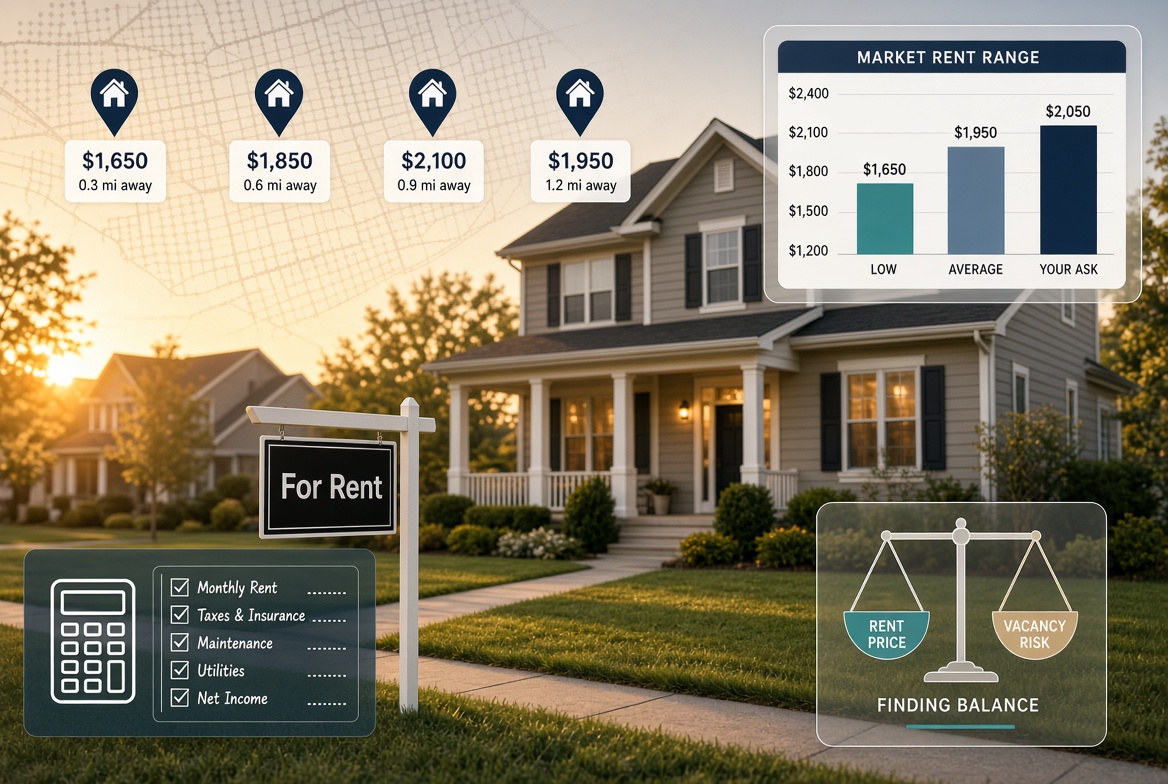
How to Set the Right Rent Price for Your Rental Property (2026 Guide for Small Landlords) To set the right rent price, compare at least five similar r

Free lease renewal letter template for landlords with state-by-state notice deadlines, rent increase rules, and the exact clauses your renewal must include. Avoid the mistakes that cost landlords $2,400 in vacancy losses.
Complete guide to every Schedule E expense category for rental property owners. Line-by-line breakdown of deductible expenses, what goes where, and how small landlords recover $3,000-$8,000 in missed deductions each year.