Fair Housing Act Compliance Guide: 7 Violations Small Landlords Make Without Knowing It
Fair Housing Act Compliance Guide: 7 Violations Small Landlords Make Without Knowing It The Fair Housing Act bans discrimination based on race, color,

Fair Housing Act Compliance Guide: 7 Violations Small Landlords Make Without Knowing It
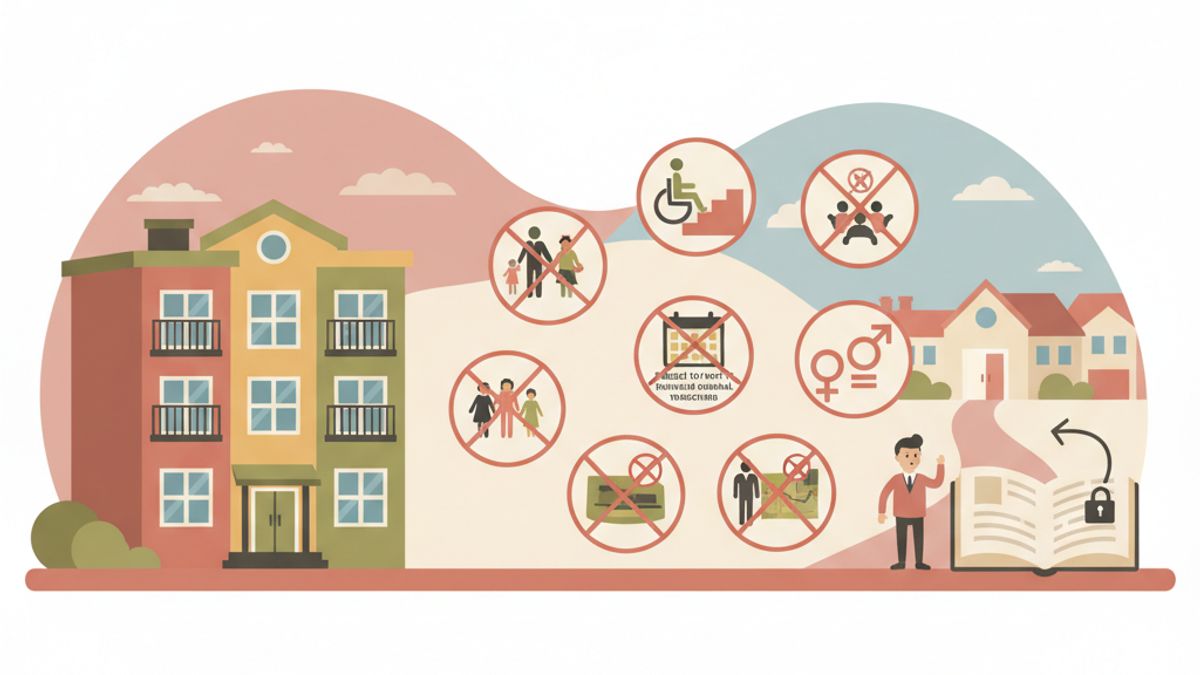
The Fair Housing Act bans discrimination based on race, color, religion, sex, national origin, disability, and familial status in renting. Most small landlords get hit with complaints over accidental violations—ad wording, inconsistent screening questions, mishandled service animals, and ignored accommodation requests. This guide shows you how to spot and fix each one.
At a Glance
| The Accidental Violation | Where It Shows Up | The Quick Fix |
|---|---|---|
| Tenant-targeted ad wording | “Perfect for young professionals,” “ideal for singles” | Describe the property, never the renter |
| “No kids” or “adults only” language | Listings (familial status is protected) | List rules and unit facts only |
| Inconsistent screening | Different questions or standards per applicant | One written checklist for every applicant |
| Pet charges on assistance animals | Pet rent, fees, and deposits | Assistance animals are not pets under the FHA |
| Demanding “certification” | Screening conversations | Ask the two allowed questions—nothing more |
| Stalled accommodation requests | Silence after a written request | Respond in writing within days |
| Verbal denials with no records | Rejecting applicants by phone | Written reasons, files kept three years or more |
We've worked with enough small landlords to know the truth: most fair housing complaints don't come from bad people. They come from good landlords who never meant to discriminate. A casual phrase in an ad. A question asked to one applicant and not another. A pet fee charged in good faith.
Run your rentals like a business—because that's exactly how fair housing enforcement sees them. Every violation on this list is fixable in an afternoon, and none of the fixes require a lawyer. Let's go through them one by one, then hand you a self-audit checklist.
Quick note: this guide is general information, not legal advice. Fair housing rules add state and city layers, so confirm the details with a local attorney or your state's civil rights agency.
What Does the Fair Housing Act Cover—and Do Small Landlords Count?
The federal Fair Housing Act makes it illegal to discriminate in renting based on seven protected classes:
- Race
- Color
- National origin
- Religion
- Sex (HUD reads this to include sexual orientation and gender identity)
- Familial status (families with children under 18)
- Disability
Most states add more, such as age, marital status, military status, or source of income (which affects “no Section 8” rules).
Here's where small landlords get tripped up. You may have heard of the “Mrs. Murphy exemption” for owner-occupied buildings with four units or fewer. It's narrower than people think, several states erase it entirely, and advertising rules apply to almost everyone regardless.
Housing discrimination cases are enforced by HUD and state agencies. Civil penalties for a first violation can reach five figures—before damages and attorney fees.
Action Step 1: Assume You're Covered
If you rent any unit to the public, treat the FHA as applying to you. It's the only safe starting point.
Action Step 2: Learn Your State's Extra Classes
Search “[your state] fair housing protected classes.” Add every extra class to your written screening policy.
Is Your Rental Ad Quietly Breaking the Law?
Ads are the number one place accidental violations live, because wording does the steering for you.
Phrases that feel friendly but create risk:
- “Perfect for young professionals” — excludes families and older renters
- “No kids” — familial status is a protected class
- “Adults only” — legal only in narrowly defined 55+ housing
- “Walking distance to church” — signals religious preference
- “No Section 8” — illegal in many cities and states with source-of-income protection
- “Great for single people” — familial and marital status risk
The fix is boring and it works: describe the property, not the tenant.
Good example: “3-bedroom ranch, fenced yard, off-street parking, $1,650/month, available June 1. Small pets considered.”
Action Step 1: Rewrite Every Ad Around the Property
Bedrooms, square footage, parking, pet rules, rent, and availability date. Nothing about who should live there.
Action Step 2: Keep a Banned-Words List
Check every new listing against it before posting. We keep ours saved in the same folder as our ad template.
Action Step 3: Post the Same Ad Everywhere
Craigslist, Facebook, Zillow—the wording should match word for word. Small differences are where mistakes sneak in.
Are Your Screening Questions Setting You Up for a Claim?
This trap catches careful landlords because the law goes further than banning illegal questions. It also bans treating similarly situated applicants differently.
You don't have to say anything discriminatory. Asking one applicant about their kids and never asking the next one is enough to support a complaint.
Questions we never ask:
- How many children do you have?
- What church do you go to?
- Where are you originally from?
- Are you planning to have more kids?
- How old are you?
Questions we ask every single applicant:
- Income and employment
- Rental history and references
- Credit and background (reviewed individually, not as blanket bans—HUD guidance flags blanket criminal-history refusals as a disparate impact risk)
Action Step 1: Write Your Criteria Down First
Income minimum, credit standard, reference rules, criminal history review process. On paper, before the first showing.
Action Step 2: Use the Same Question List for Everyone
Print it. Fill out one sheet per applicant—even the ones who impress you in person. That sheet is your evidence later.
Action Step 3: Score Applications on Paper
Rate each application against the written criteria and rent to the highest score. Gut feelings are not a defense. Scores are.
Do You Know the Difference Between a Pet and an Assistance Animal?
This one misunderstanding causes more small-landlord complaints than anything else here.
Under the FHA, assistance animals—service animals and emotional support animals—are not pets. That means:
- Your “no pets” policy does not apply to them
- You cannot charge pet rent, pet fees, or a pet deposit
- Breed and weight limits don't apply
When the disability or the animal's role isn't obvious, you may ask two questions:
- Is this animal needed because of a disability?
- What work or task is it trained to perform, or what assistance does it provide?
That's it. You cannot demand “certification,” registration papers, or a vest. Those online registries are not legal requirements, and demanding them is itself a violation.
Action Step 1: Fix Your Pet Policy Wording
Your lease should say: “Pets are allowed per the pet policy. Assistance animals are not pets and are exempt from pet rules and pet fees.”
Action Step 2: Ask Only the Two Allowed Questions
Then stop and write the answers down. If the responses are consistent with the request, approve it.
Action Step 3: Waive Every Pet Charge
Pet rent, pet deposit, pet fee—zero, every time. Budget separately for potential animal damage as a business cost instead of billing it to assistance-animal tenants.
How Should You Handle a Reasonable Accommodation Request?
A reasonable accommodation is a change to your rules, policies, or services that a person with a disability needs to use and enjoy the housing. Common examples: grab bars, a reserved parking spot near the entrance, a live-in aide, or an assistance animal in a no-pet building.
The most dangerous response is also the most common: silence. Landlords stall because they don't know what to say. Under the law, stalling reads as refusing.
Action Step 1: Respond in Writing, Fast
Even without a final answer, acknowledge within a few days: “We received your request and are reviewing it. We'll respond by [date].” Then hit that date.
Action Step 2: Request Documentation Only When It's Not Obvious
If a tenant who uses a wheelchair asks for a grab bar, approve it. If a request isn't obvious, you may ask for reliable documentation of the disability and the need—never medical records or a specific diagnosis.
Action Step 3: Log Every Request and Decision
Date received, what was requested, what you asked back, what you decided, and why. Legally recognized reasons to deny are undue financial burden or a fundamental alteration of your operations. “I'd rather not” is not on the list.
What Records Do You Need to Keep to Protect Yourself?
A fair housing complaint turns into a paperwork test fast. The landlord with files wins. The landlord with memories loses.
Deadlines matter: a tenant has one year to file a HUD complaint and two years to sue in federal court. Your records must outlast both.
Action Step 1: Keep a File for Every Applicant, Not Just Tenants
Applications, screening sheets, notes, emails, and texts. Rejected applicants matter most.
Action Step 2: Deny in Writing, Every Time
One short paragraph naming the criteria the application didn't meet. No commentary about the person.
Action Step 3: Store Compliance Records Three Years or Longer
Keep everything in one searchable place. Scattered texts and shoeboxes don't survive an investigation.
Which Tools Make Compliance Easier for a One-Person Landlord?
You don't need a lawyer on retainer. You need one system that keeps applications, messages, documents, and requests organized, so your paper trail builds itself.
| Feature | Property Aura | Buildium | TurboTenant |
|---|---|---|---|
| Standardized applications | Every applicant gets the same form and questions | Available, with paid per-application screening | Available, with paid screening reports |
| Communication log | All applicant and tenant messages in one searchable thread | Email templates with message history | Built-in messaging center |
| Document storage | Screening criteria, leases, and records stored per property | Document library | Document storage |
| Request tracking | Maintenance and accommodation requests logged with dates | Full work order system | Maintenance request tracking |
| Best fit | Self-managing landlords with 1–50 units | Larger portfolios with staff | Small portfolios on a tight budget |
We built Property Aura because we were tired of compliance living inside text message threads. Whatever tool you pick, the standard is the same: one place, every record, searchable.
Ready to Run Your Fair Housing Self-Audit?
Here's the checklist we run on our own units. Print it, do it twice a year, and always before a new listing goes live.
- Read every live ad word by word. Cut anything that describes people instead of the property.
- Confirm your written screening criteria exist and are dated.
- Pull your last five applications. Confirm each one got the same questions.
- Check your lease and pet policy for the “assistance animals are not pets” line.
- Confirm every pet charge was waived for assistance animals.
- Review your last accommodation request. Was it answered in writing, on time?
- Verify a written denial exists for every rejected applicant.
- Confirm records are stored for at least three years.
Action Step 1: Audit Twice a Year
Calendar it like a smoke-detector test. Fifteen minutes per property.
Action Step 2: Fix Gaps Before the Next Ad Goes Live
Never list a unit with a risky ad while you're mid-audit. Fix first, post second.
Action Step 3: Write Down Your Process
One page: your ad template, screening criteria, assistance-animal questions, and accommodation response script. Written processes can't be improvised by accident.
What Do the Most Common Fair Housing Mistakes Cost?
- Tenant-targeted ad wording
- The Mistake: steering away from families, older renters, or religious groups through listing language.
- The Cost: HUD civil penalties can reach five figures for a first violation—before damages and attorney fees.
- Improvised screening
- The Mistake: different questions or standards for different applicants.
- The Cost: a single inconsistency can support a discrimination claim and shifts the burden of proof onto you.
- Treating an assistance animal like a pet
- The Mistake: charging pet rent or deposits, or demanding certification papers.
- The Cost: refund demands, a complaint filing, and a denial that is nearly impossible to defend.
- Stalling on an accommodation request
- The Mistake: no written response, no timeline, no decision.
- The Cost: silence counts as refusal, and refusals without legal justification lose cases.
- Verbal denials with no paper trail
- The Mistake: rejecting applicants by phone with no written reason and no records.
- The Cost: your word against theirs, with no evidence. Those cases settle, and settlements are rarely cheap.
Frequently Asked Questions
1. Does the Fair Housing Act apply if I only rent out one unit?
Almost always, yes. The owner-occupied exemption is narrow, many states erase it, and advertising rules reach nearly everyone. Assume it applies to you.
2. Can I still say “no pets” in my listing?
Yes. A no-pet policy is legal. But it never applies to assistance animals, and some areas restrict voucher or source-of-income refusals too. Keep the policy, fix the wording.
3. Can I ask for proof of a service or assistance animal?
Only when the disability or the animal's role isn't obvious. Then ask the two allowed questions or request reliable documentation. Never demand registries, certificates, or medical records.
4. What happens if a tenant files a fair housing complaint against me?
HUD or your state agency notifies you and investigates, often resolving cases through conciliation. This is when your screening sheets, written responses, and files do the heavy lifting. Remember: one year to file with HUD, two years to sue.
5. How long do I need to keep rental applications?
At least three years, long enough to cover both complaint windows. Include screening sheets, denial letters, and communications. When in doubt, keep it longer.
Turn Compliance Into a Habit With Property Aura
Fair housing compliance isn't about memorizing law. It's about running the same clean process every single time. Property Aura keeps your listings, applications, screening notes, messages, and request logs in one place—so if a complaint ever shows up, your paper trail is already done.
Start your free trial of Property Aura and make compliance the easiest part of landlording.
Related Topics
Related Articles

AppFolio Alternative for Small Landlords: 7 Reasons 1–50 Unit Landlords Are Switching in 2026 An AppFolio alternative is property management software

How to Screen Tenants: A Step-by-Step Checklist for Small Landlords (2026) Screening tenants means verifying each applicant's identity, income, credit

7 Red Flags in Tenant Applications: A Small Landlord's Screening Checklist The biggest red flags in tenant applications are income that doesn't match